
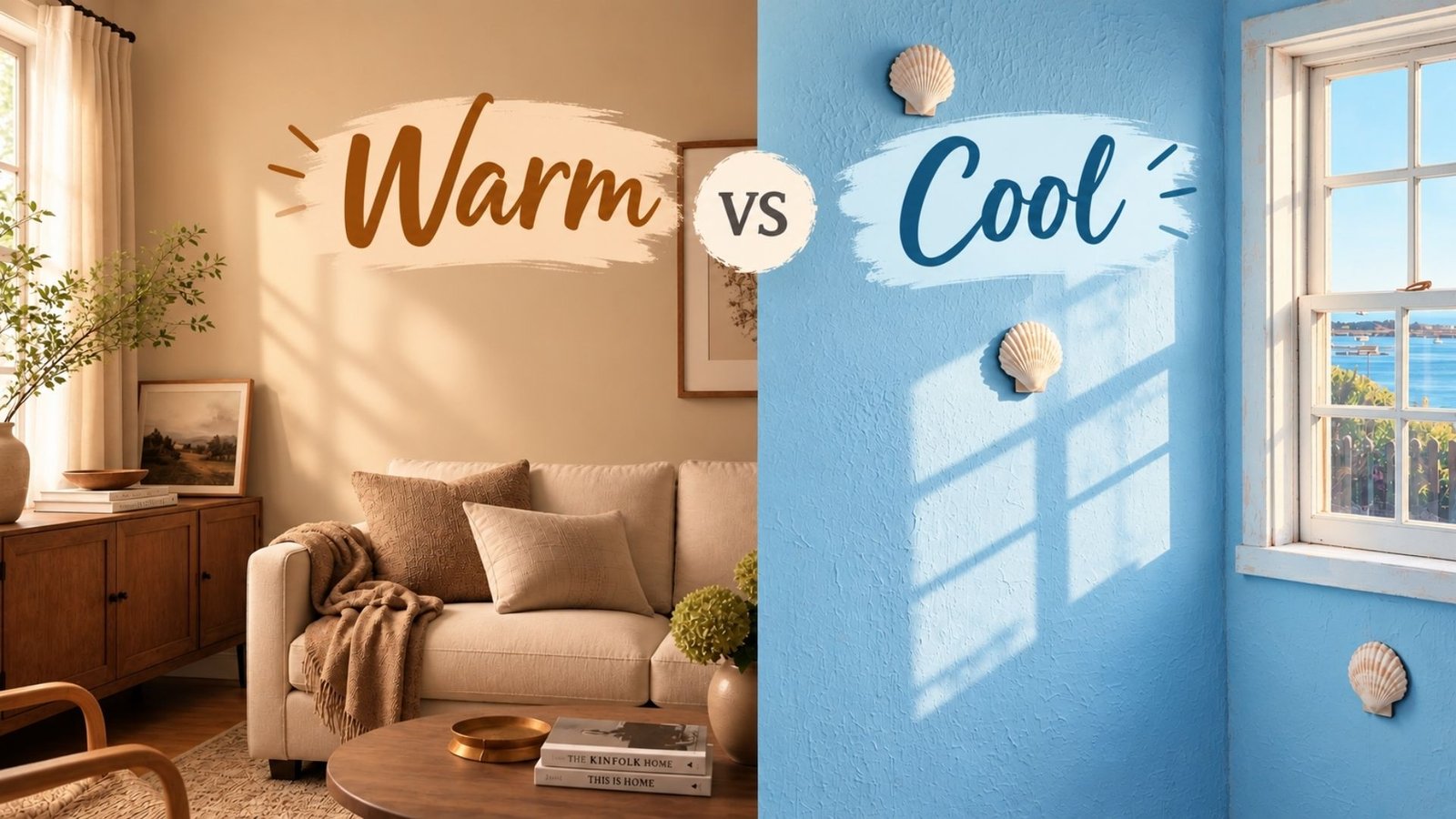
Choosing an interior paint color is about more than picking a shade you like. The temperature of a color can change how a room feels, how large it appears, and how well it works with your furniture and lighting. Warm paint colors can make a space feel cozy and inviting, while cool shades often create a calm, fresh atmosphere.
Understanding the difference between warm and cool paint colors can help you choose a shade that works with your home’s natural light, existing finishes, and overall style.
What Are Warm Paint Colors?
Warm paint colors are typically associated with red, orange, and yellow. However, many neutral shades can also be warm when they have yellow, red, or brown undertones.
Common warm paint colors include:
- Cream and warm white
- Beige and warm taupe
- Terracotta
- Soft yellow
- Warm brown
- Certain shades of red and orange
- Warm greige
Warm colors generally create a welcoming and comfortable feeling. They can work particularly well in living rooms, dining rooms, kitchens, and other spaces where you want a relaxed and inviting atmosphere.
Warm shades can also be useful in rooms that receive limited natural light because they can counteract some of the cooler feeling created by low or indirect light.
What Are Cool Paint Colors?
Cool paint colors are generally associated with blue, green, and purple. Neutral colors such as gray and white can also be cool when they contain blue, green, or violet undertones.
Popular cool paint colors include:
- Soft blue
- Sage and blue-green
- Cool gray
- Lavender
- Blue-white
- Slate
- Muted green
Cool colors tend to create a calm, clean, and refreshing atmosphere. They can be especially appealing in bedrooms, bathrooms, home offices, and other spaces where you want a peaceful or focused environment.
Warm vs. Cool Paint Colors: What’s the Difference?
The biggest difference is the mood each color temperature creates.
| Warm Paint Colors | Cool Paint Colors |
| Cozy and inviting | Calm and refreshing |
| Feel more intimate. | Can feel open and airy |
| Red, orange, and yellow undertones | Blue, green, and violet undertones |
| Great for social spaces | Great for relaxing spaces |
| Can add warmth to darker rooms | Can balance bright, sunny rooms |
However, there is no universal rule that says a particular color temperature must be used in a specific room. Your home’s lighting, furniture, flooring, and personal style should all influence your decision.
How Lighting Affects Warm and Cool Paint Colors
Lighting is one of the most important factors to consider before choosing an interior paint color. A shade that looks perfect on a paint card can appear noticeably different once it is on your walls.
Natural light changes throughout the day. North-facing rooms generally receive cooler, less direct light, so warm colors can help create a more balanced and comfortable appearance. South-facing rooms typically receive warmer, stronger light, where cooler shades can help create visual balance. East- and west-facing rooms can change significantly throughout the day, so consider when you use the room most often.
Artificial lighting matters, too. Warm bulbs can emphasize yellow, red, and orange undertones, while cooler lighting can make blue and green undertones more noticeable.
For this reason, always test paint samples on the actual wall and observe them at different times of day before making your final choice.
Warm vs. Cool Paint Colors for Different Rooms
Living Room
Warm colors are a popular choice for living rooms because they can make the space feel comfortable and welcoming. Warm beige, creamy white, taupe, and earthy tones can pair beautifully with wood furniture and natural textures. If you’re looking for more inspiration, explore our guide to the best paint colors for your living room to find shades that can complement different styles and lighting conditions.
Bedroom
Bedrooms are ideal for colors that encourage relaxation. Soft warm neutrals can create a cozy, comfortable environment, while muted blues, greens, and blue-grays can provide a peaceful feeling.
The best choice depends on whether you want your bedroom to feel warm and cocooning or light and tranquil.
Kitchen
Warm neutrals can complement wood cabinets, natural stone, and warm metal finishes particularly well. Creamy whites, beige, and soft taupe can create an inviting kitchen without overwhelming the space.
For a more contemporary appearance, consider cool whites, soft gray, muted blue, or green.
Bathroom
Cool colors are often a natural fit for bathrooms because blues and greens can create a clean, refreshing atmosphere. Soft blue-gray and muted green can work particularly well.
However, warm whites and beige can also make a bathroom feel softer and more inviting, especially when paired with warm wood or brass accents.
Home Office
For a home office, consider how you want the space to affect your concentration and energy. Cool blue- or green-based shades can create a calm backdrop, while warm neutrals can make the room feel comfortable without being distracting.
Don’t Forget About Paint Undertones
One of the biggest mistakes homeowners make is looking only at the main color instead of its undertone.
For example, two gray paints may both appear gray on a sample card, but one might have a blue undertone while another has a beige or yellow undertone. Once they cover an entire wall, the difference can become much more noticeable.
The same applies to white. Warm whites usually contain subtle yellow, red, or beige undertones, while cool whites may lean toward blue, gray, or green.
Before choosing a neutral paint color, compare several samples together and look at them in your actual room.
Can You Mix Warm and Cool Paint Colors?
Yes. You don’t have to choose one temperature for your entire home.
Combining warm and cool colors can create balance and visual interest. For example, cool blue walls can work beautifully with warm wood flooring and furniture. Likewise, a warm neutral wall color can be paired with cool-toned artwork or textiles.
The key is to create a connection between the colors through furniture, flooring, accessories, trim, or other finishes. In open-concept homes, pay particular attention to colors that are visible from adjoining spaces so the overall palette feels cohesive.
How to Choose the Right Paint Color for Your Home
Before committing to a warm or cool shade, consider these factors:
- Look at the natural light. Determine how much sunlight the room receives and which direction the windows face.
- Consider the room’s purpose. Decide whether you want the space to feel cozy, energetic, calm, or refreshing.
- Check existing finishes. Look at your flooring, cabinets, countertops, furniture, and trim for their underlying tones.
- Identify undertones. Don’t assume every white, gray, beige, or green will work the same way.
- Test samples. Paint large sample areas and view them in morning, afternoon, and evening light.
- Think about adjoining rooms. Choose colors that work together when spaces are visually connected.
Taking these steps can help you avoid choosing a color that looks completely different once it is on your walls. If you’re also planning to update your home’s exterior, you can explore our guide to exterior paint colors that make your home look expensive for ideas that can complement your home’s overall style.
Final Thoughts
Warm and cool paint colors can each transform the look and feel of your home. Warm shades can bring comfort and character, while cool colors can create a calm and refreshing atmosphere. The right choice ultimately depends on your room’s lighting, existing finishes, purpose, and personal style.
If you’re planning an interior painting project and need help selecting colors that work with your home’s space and lighting, AHC Painting and Remodeling can help you create an interior that looks beautiful and feels right for your home.