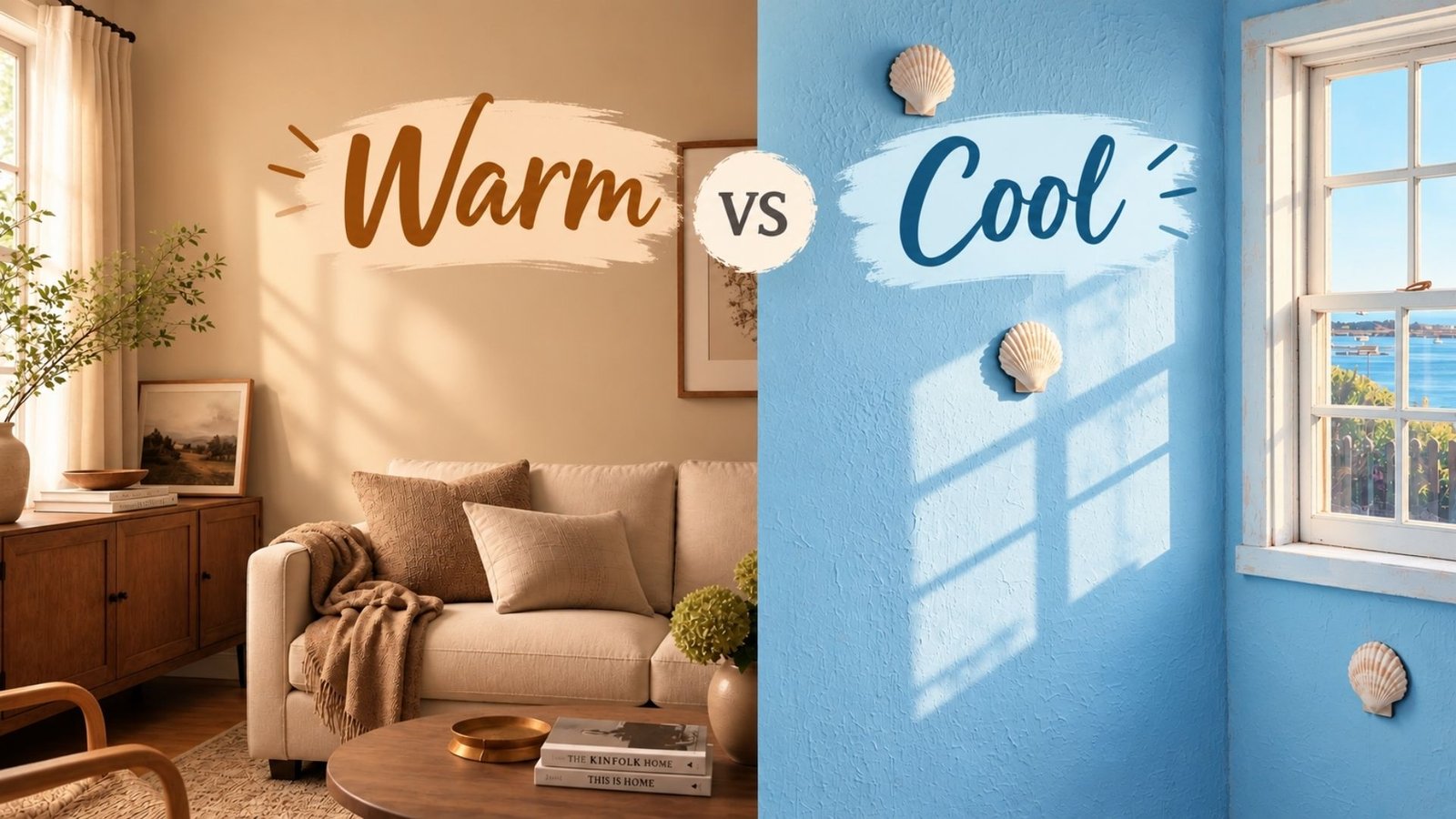
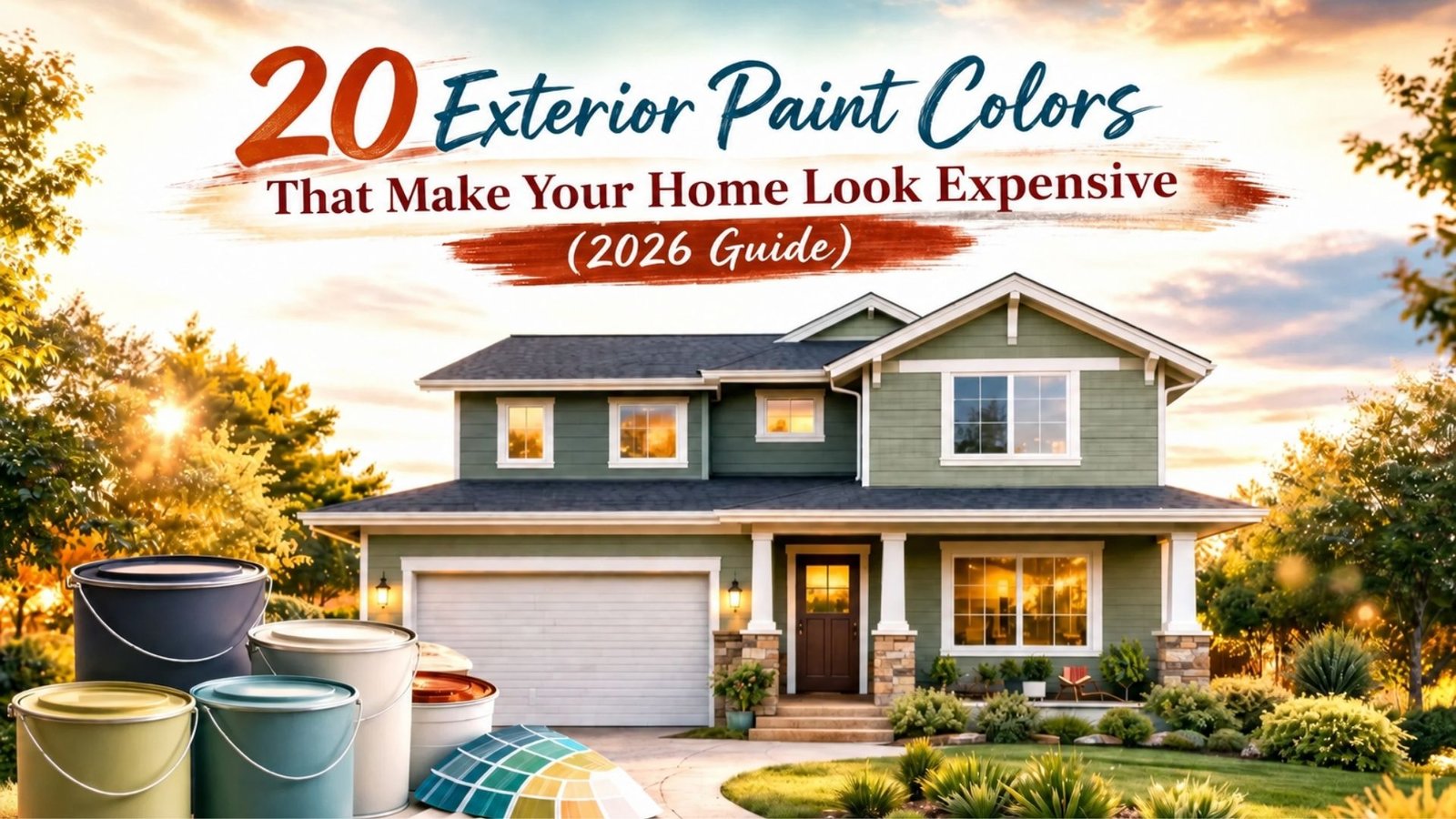
Choosing the right exterior paint color is one of the easiest ways to improve curb appeal and give your home a more polished, high-end appearance.
In 2026, exterior color trends are moving toward warmer neutrals, earthy greens, rich browns, creamy whites, muted blue-greens, and sophisticated dark accents. Beige, in particular, has become a leading choice among homeowners, while warmer versions of traditional gray and white remain popular.
But an expensive-looking exterior isn’t simply about choosing a trendy color. The best results come from coordinating your siding, trim, front door, roof, stone, brick, landscaping, and surrounding materials.
In this guide, we’ll cover 20 exterior house paint colors that can make your home look expensive in 2026, along with color families, high-end color combinations, recommendations by home style, and practical tips for choosing the right exterior palette.
What Exterior Paint Colors Make a House Look Expensive?
The exterior colors that tend to create a sophisticated appearance are usually balanced, muted, and easy to coordinate with the home’s permanent features.
Warm beige, taupe, greige, creamy white, khaki, earthy green, rich brown, navy, charcoal, and soft black can all create an upscale look when used correctly.
In 2026, there is also a noticeable shift toward warmer and more nature-inspired exterior palettes rather than relying exclusively on cool gray and stark white.
For an expensive-looking exterior, consider:
- Warm rather than overly cool neutrals
- Muted greens and blue-greens
- Rich brown and earthy tones
- Creamy whites instead of extremely stark whites
- Dark accents used strategically
- Natural wood and stone
- A coordinated body, trim, and accent palette
How to Choose Exterior House Colors
Choosing exterior house colors involves more than selecting a shade that looks attractive on a paint swatch. Your roof, brick, stone, windows, doors, landscaping, and surrounding environment can all influence how a color looks on your home.
Start by looking at the permanent features of your property and identify whether they have warm, cool, or neutral undertones. Then choose a main exterior color that works with those existing elements instead of competing with them.
Lighting is another important factor. Exterior paint can look different in direct sunlight, shade, and evening light, so testing your preferred color in several areas of the home can help you make a more confident decision.
Before choosing your exterior house paint colors, consider:
- Your roof color and material
- Existing brick and stone
- Window and door colors
- Natural landscaping
- Amount of sunlight your home receives
- Architectural style
- Neighborhood surroundings
- Trim and accent colors
A well-planned exterior usually works best with a simple, coordinated palette rather than several unrelated colors.
Exterior House Color Families That Can Transform Your Home
Exterior house paint colors can be grouped into several broad color families. Understanding these families can make it easier to narrow down your choices and create a cohesive exterior palette.
Warm Neutral Exterior Colors
Warm beige, greige, khaki, and taupe provide versatile foundations for many home styles. These shades work especially well with brick, stone, wood, and warm roofing materials.
White and Soft Neutral Exterior Colors
Creamy white, soft ivory, and classic white create a clean and timeless appearance. They can be paired with dark trim, natural wood, stone, or colorful front doors.
Green and Blue-Green Exterior Colors
Forest green, olive, sage, warm eucalyptus, and smoky jade bring an earthy, nature-inspired appearance to the exterior. These colors work particularly well with landscaping and natural materials.
Blue Exterior Colors
Navy blue, soft blue-gray, and muted blue shades can add personality while maintaining a sophisticated appearance. They work well with traditional, coastal, transitional, and contemporary homes.
Brown and Earthy Exterior Colors
Rich brown, deep umber, and terracotta or clay shades add warmth and depth. These colors can be especially effective with wood, stone, brick, and Southwestern or rustic architecture.
Dark Exterior Colors
Charcoal gray and soft black create strong architectural contrast. They can be used as primary exterior colors or as accents on trim, shutters, garage doors, and front doors.
20 Exterior Paint Colors That Make Your Home Look Expensive
1. Warm Beige
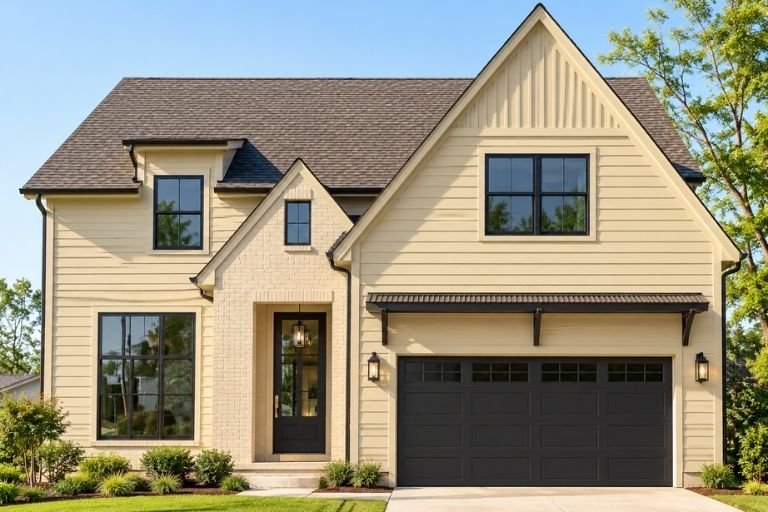
Warm beige is one of the strongest exterior color choices for 2026.
It creates a welcoming, established appearance without feeling too formal. Unlike very yellow beige, balanced warm beige works well with a wide range of architectural styles and natural materials.
Use warm beige on siding, stucco, or the main exterior walls and pair it with cream trim, dark brown accents, black shutters, or natural wood.
It is especially attractive when the home already has stone, brick, brown roofing, or warm landscaping.
Best combinations: Warm beige + cream + dark brown
2. Warm Greige (Gray + Beige Blend)
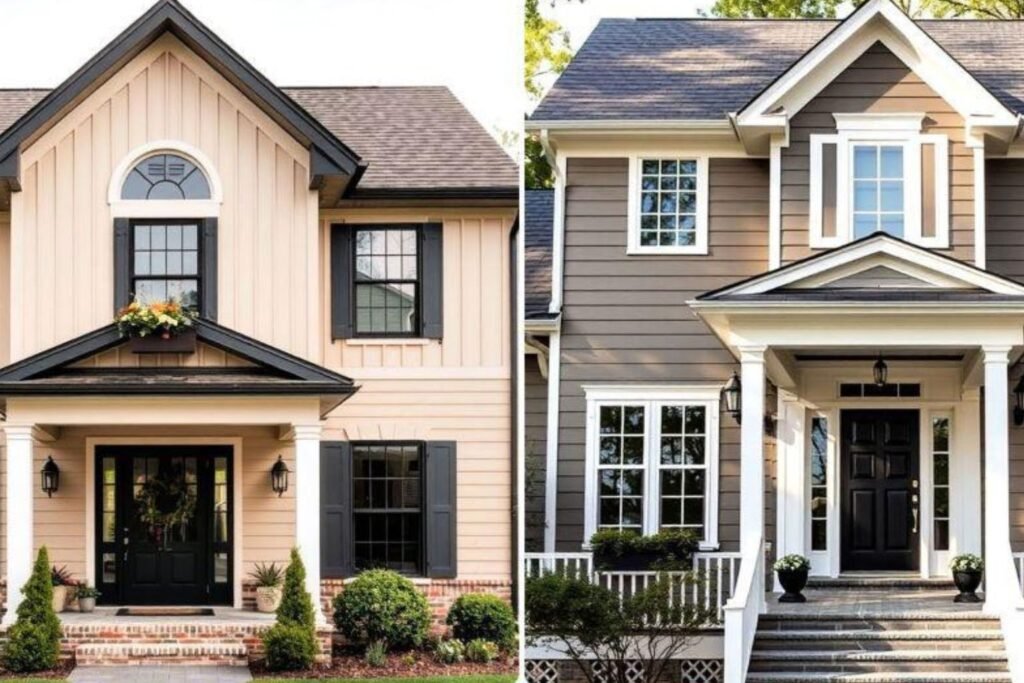
Greige combines the versatility of gray with the warmth of beige.
It remains one of the easiest exterior colors to work with because it provides a neutral foundation without looking plain or overly cold.
For a current look, choose a greige with warm beige or brown undertones instead of a strongly blue-gray shade.
Warm greige works especially well on modern, ranch, transitional, and contemporary homes.
Best combinations: Warm greige + warm white + black
For more interior color inspiration, explore our guide to modern house paint color ideas.
3. Universal Khaki
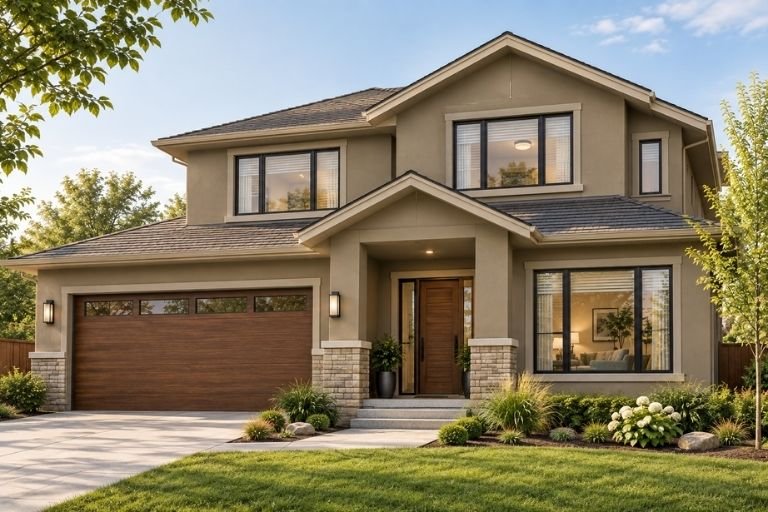
Warm khaki is an excellent choice if you want something more distinctive than traditional beige.
Sherwin-Williams selected Universal Khaki SW 6150 as its 2026 Color of the Year, highlighting the continued movement toward warm, grounded neutrals.
Khaki works particularly well with natural materials such as stone, brick, wood, and landscaping.
For a refined exterior, consider khaki siding with creamy white trim, natural wood, dark bronze, or a deep brown front door.
Best combinations: Universal Khaki + creamy white + natural wood
4. Classic Taupe
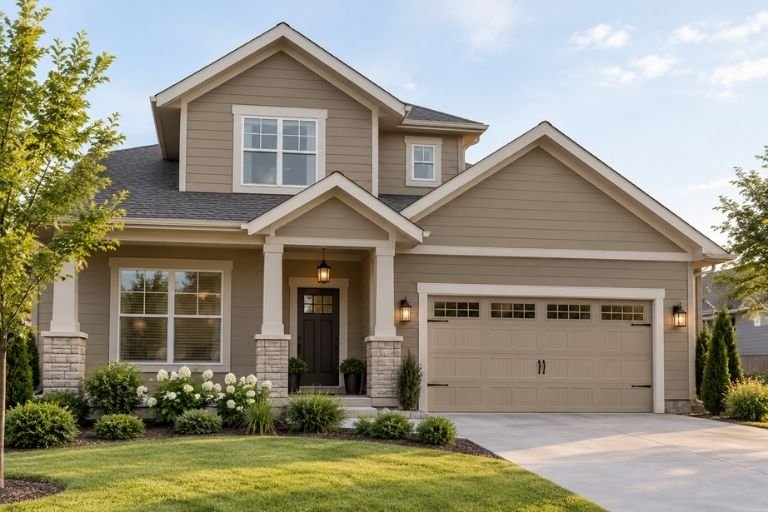
Taupe sits between beige and gray and usually contains subtle brown undertones.
It is a sophisticated option for homeowners who want a neutral exterior without choosing traditional beige.
Taupe works beautifully with natural stone, brown roofing, wood accents, and warm landscaping.
For an upscale appearance, combine taupe siding or stucco with cream-colored trim, dark bronze hardware, natural stone, or a deep brown front door.
Best combinations: Taupe + ivory + dark bronze
5. Creamy Off-White
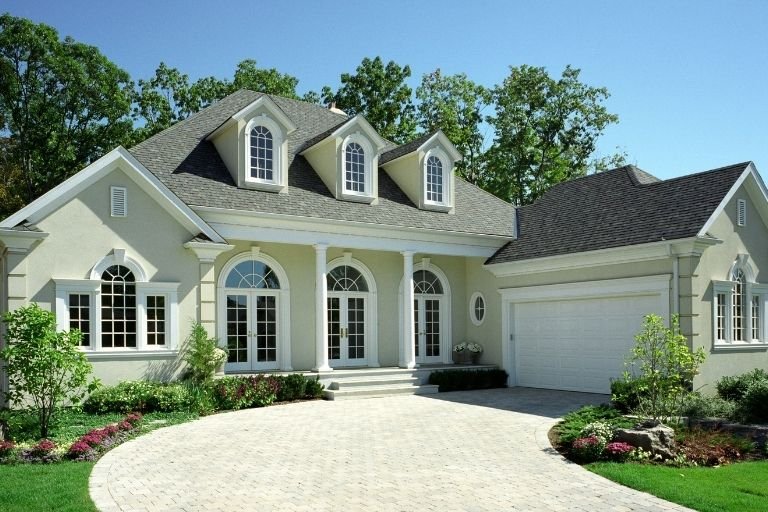
Creamy off-white provides the clean look of white without the stark feel some bright whites can create.
It works particularly well on farmhouse, traditional, transitional, cottage, and modern homes.
Creamy whites look especially attractive next to natural wood, stone, black accents, and darker roofing.
If your home receives strong sunlight, a softer white can also create a more comfortable visual appearance than an extremely bright white.
Best combinations: Creamy off-white + black + natural wood
6. Soft Ivory
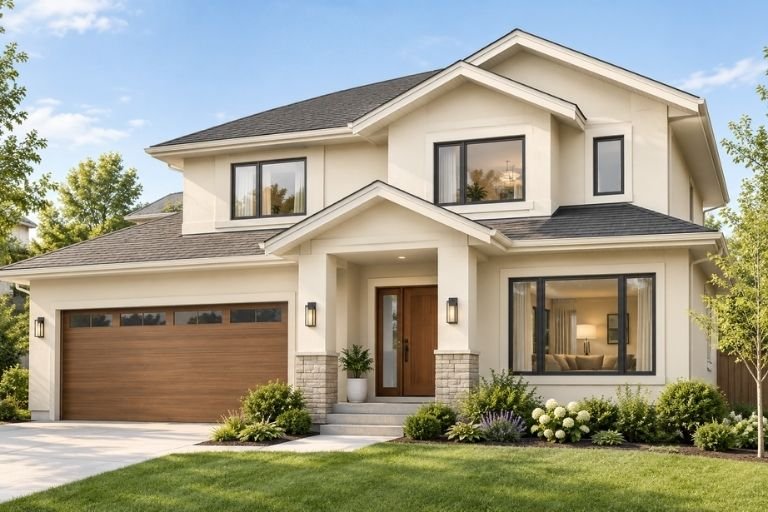
Soft ivory is another excellent alternative to pure white.
Its subtle warmth makes it easy to coordinate with brick, stone, wood, beige, taupe, and earthy landscaping.
Ivory can make architectural details feel more intentional while maintaining a classic appearance.
For a high-end palette, try soft ivory siding with taupe shutters, dark bronze hardware, or a rich brown front door.
Best combinations: Soft ivory + taupe, forest green, brown, or black.
7. Classic White with Black Accents
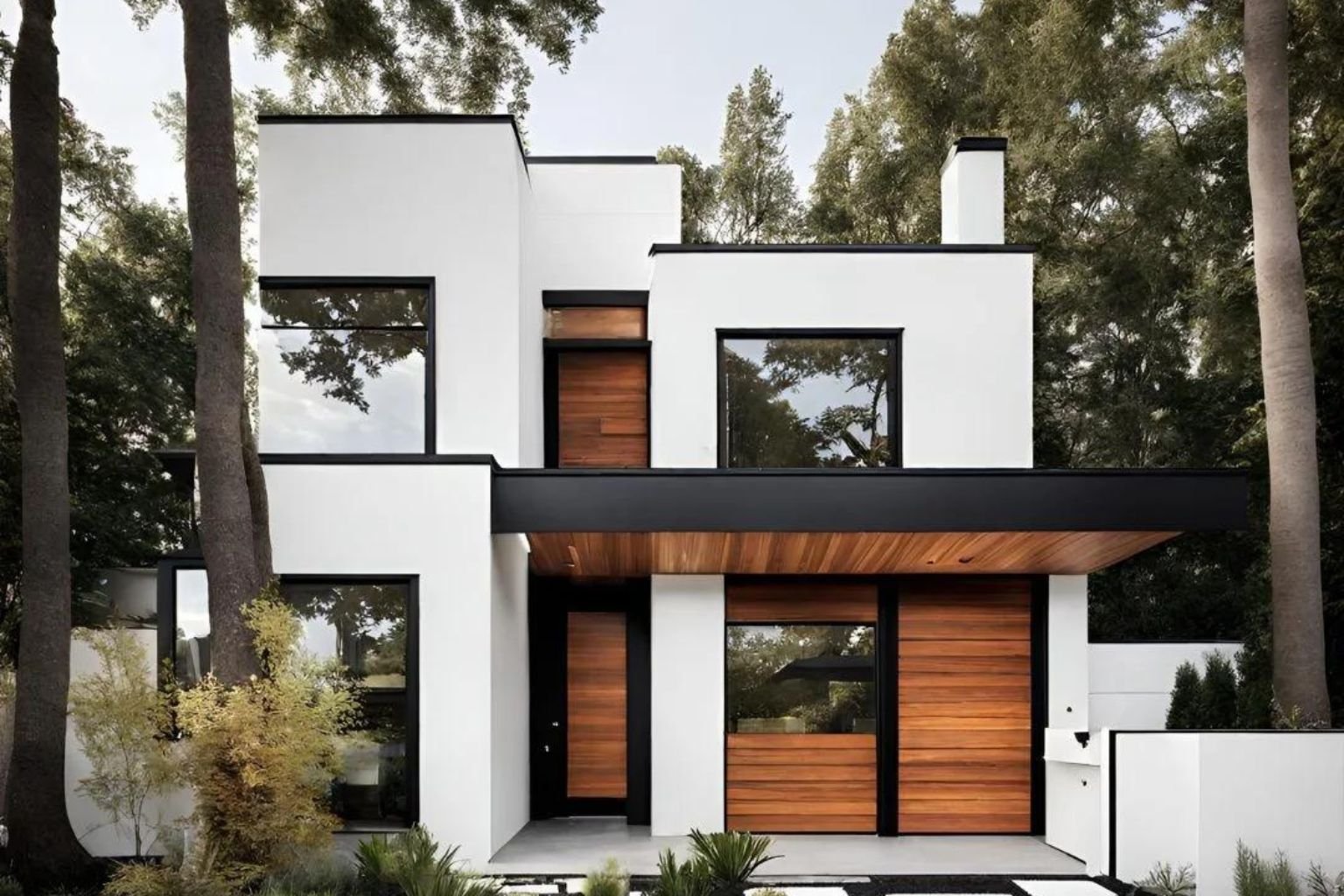
White exteriors remain one of the most popular choices for a reason. A clean white finish paired with black trim or window frames creates a sharp, modern contrast. This combination works well for both traditional and contemporary homes, giving a timeless and upscale appearance.
Best combinations: White + black + natural wood
8. Deep Forest Green
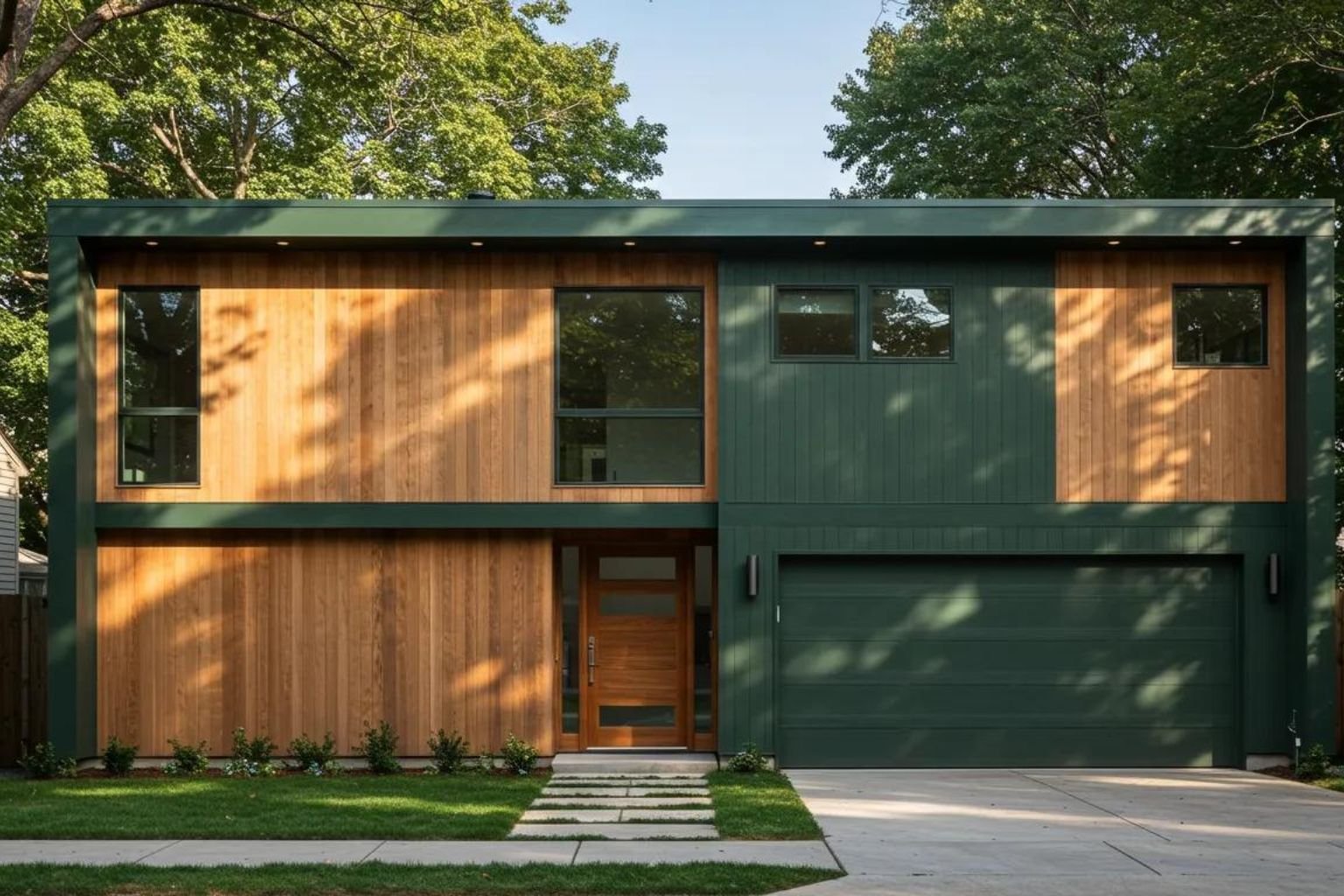
Deep forest green brings richness and depth while maintaining a strong connection with nature.
It is particularly effective on Craftsman, traditional, cottage, and wooded properties.
Forest green looks excellent alongside stone, wood, brick, and mature landscaping.
For a sophisticated combination, use forest green siding with warm ivory trim and natural wood accents.
Best combinations: Forest green + ivory + cedar
9. Muted Olive Green
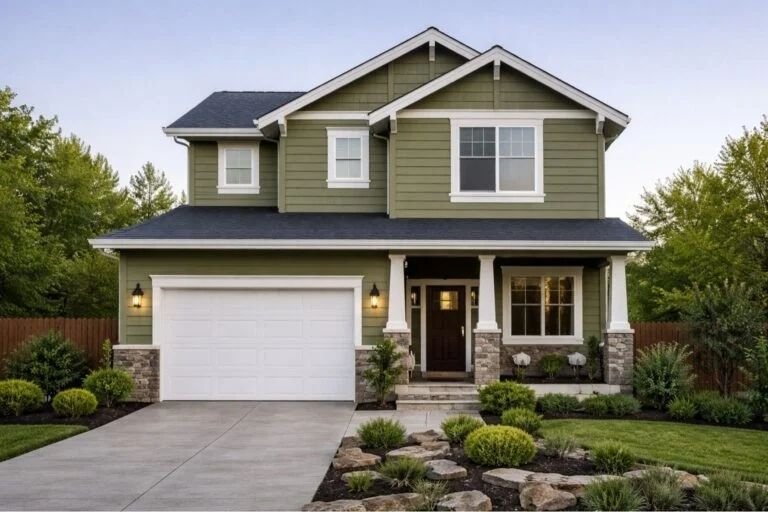
Muted olive is a softer alternative to deep forest green.
Its earthy undertones help the home blend naturally with landscaping instead of competing with it.
Olive works particularly well on ranch, Craftsman, farmhouse, and contemporary homes.
For a polished exterior, combine olive with cream, warm beige, natural wood, or dark bronze.
Best combinations: Olive + cream + natural wood
10. Sage Green
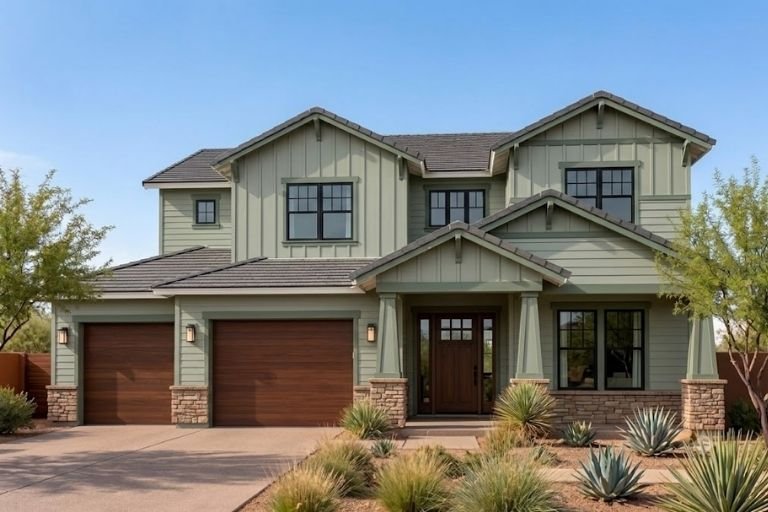
Sage green offers color without overwhelming the architecture.
A muted sage can make a home feel fresh and natural while remaining sophisticated.
It works especially well when the surrounding property contains trees, grass, stone, or other natural elements.
For a timeless appearance, pair sage with cream, warm white, taupe, natural wood, or bronze hardware.
Best combinations: Sage green + cream + cedar
11. Warm Eucalyptus
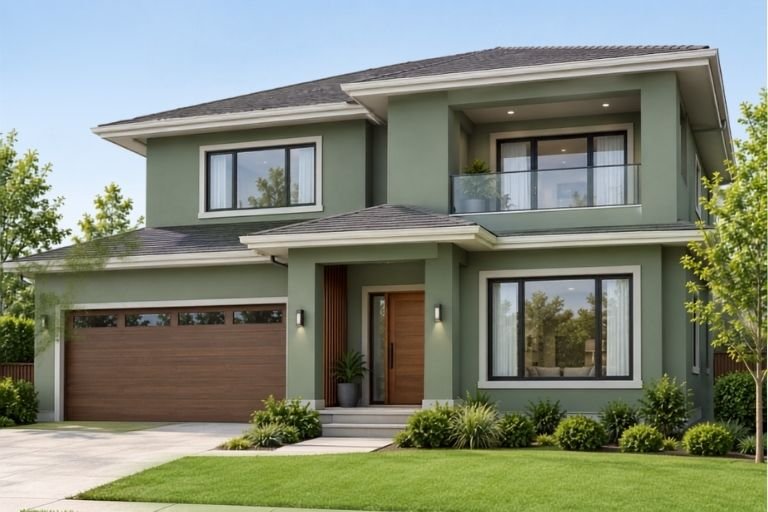
Warm eucalyptus provides a softer green option for homeowners who want something current but not overly dramatic.
Valspar selected Warm Eucalyptus as its 2026 Color of the Year, reflecting the broader interest in grounded green tones.
This color can work well on siding, exterior walls, or selected architectural areas.
Pair it with creamy white, warm beige, natural wood, or charcoal accents.
Best combinations: Warm eucalyptus + creamy white + wood
12. Smoky Jade or Blue-Green
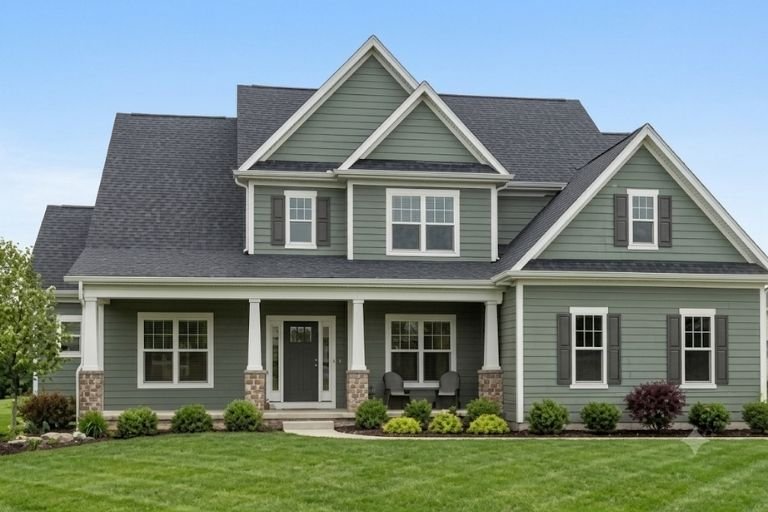
Blue-green shades provide a more distinctive alternative to traditional neutrals.
BEHR’s Hidden Gem was selected as its 2026 Color of the Year and represents this growing interest in smoky blue-green tones.
A muted blue-green can add personality without making the exterior feel overly bright.
It works particularly well with warm white, cream, natural wood, stone, or restrained black accents.
Best combinations: Smoky jade + warm white + natural wood
13. Classic Navy Blue
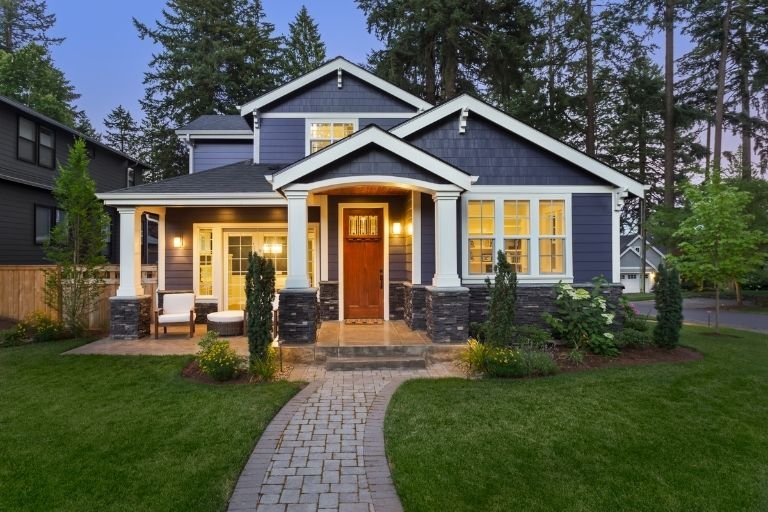
Navy blue remains one of the safest choices for homeowners who want a darker exterior with a classic appearance.
It works particularly well on traditional, coastal, colonial, transitional, and modern homes.
For a more current look, pair navy with warm white or natural wood rather than relying exclusively on stark white.
Navy can also be an excellent choice for front doors, shutters, and other accents.
Best combinations: Navy + warm white + natural wood
14. Soft Blue-Gray
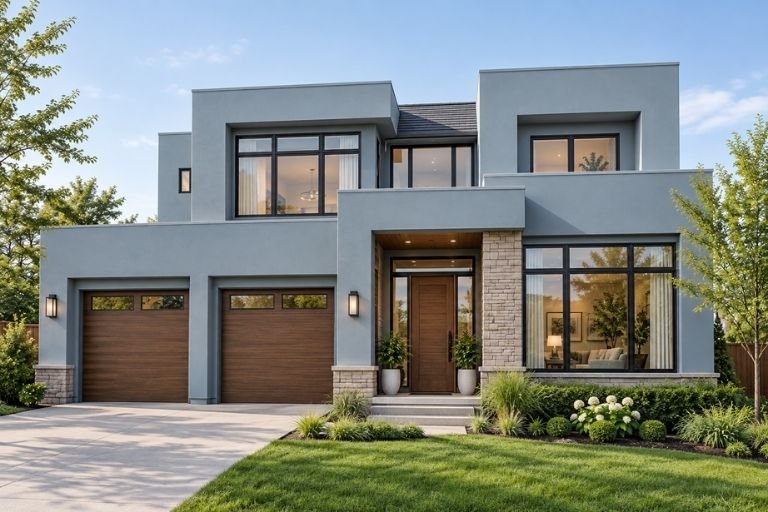
Soft blue-gray provides subtle color while retaining the versatility of a neutral.
Instead of choosing an icy blue-gray, consider a muted shade with softer undertones.
This color works well on cottages, traditional homes, coastal properties, and transitional architecture.
Pair it with warm white, ivory, natural wood, or charcoal accents.
Best combinations: Blue-gray + ivory + natural wood
15. Woodlawn Blue
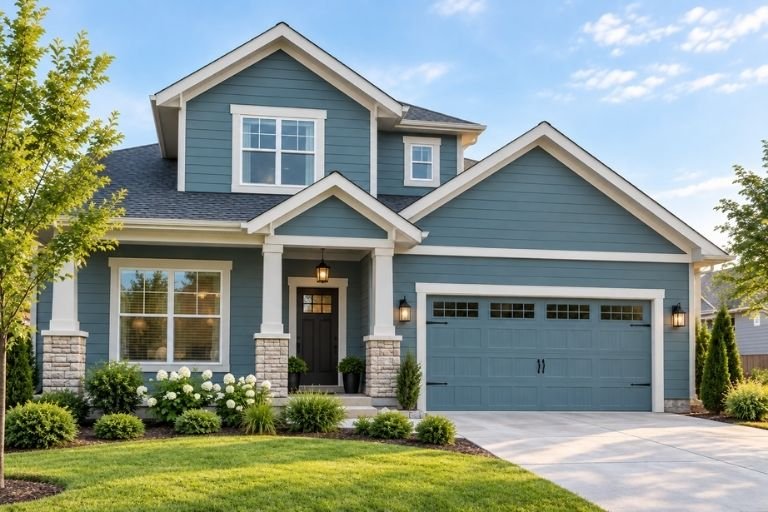
Woodlawn Blue is a soft, muted blue with enough warmth to work comfortably alongside traditional and natural exterior materials. It offers more color than a neutral while remaining understated and sophisticated.
This shade works particularly well on traditional, cottage, coastal, Craftsman, and transitional homes. It can also be paired with warm white trim, natural wood, stone, or muted gray accents.
16. Rich Brown
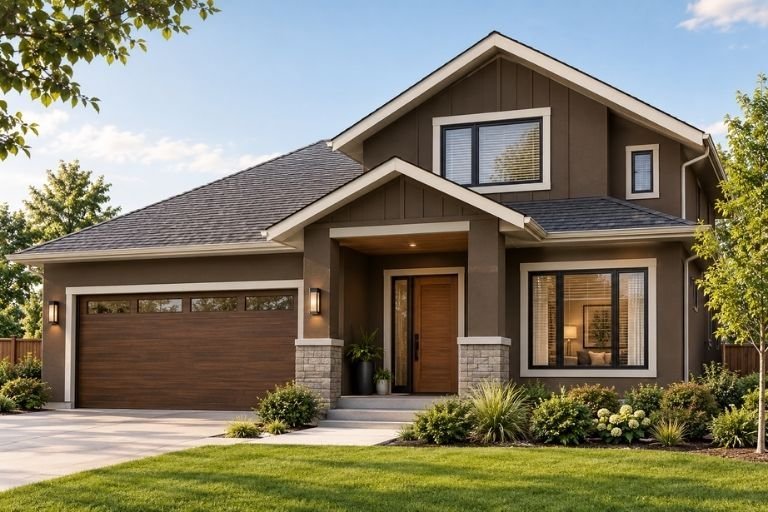
Rich brown is becoming an appealing alternative to black and cool gray exteriors.
Deep brown creates visual depth while feeling warmer and more connected to natural materials.
It works particularly well with homes featuring stone, wood, brick, bronze, copper, or warm landscaping.
Use rich brown on siding or larger architectural sections and balance it with cream, ivory, or natural stone.
Best combinations: Rich brown + cream + stone
17. Deep Umber
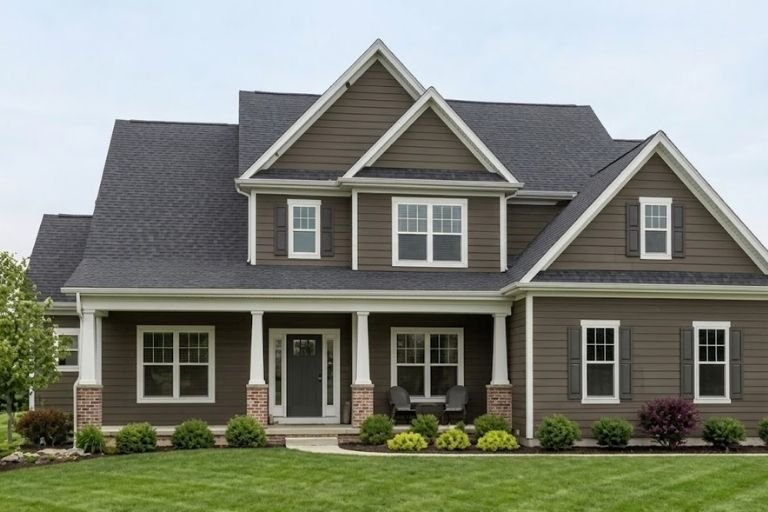
Deep umber provides the drama of a dark exterior while adding warmer brown undertones.
Benjamin Moore’s Silhouette AF-655, its 2026 Color of the Year, is an example of the broader movement toward sophisticated brown-black shades.
Deep umber can work beautifully on modern homes, exterior doors, shutters, trim, or selected sections of a larger exterior.
Best combinations: Deep umber + creamy white + natural wood
18. Terracotta or Clay
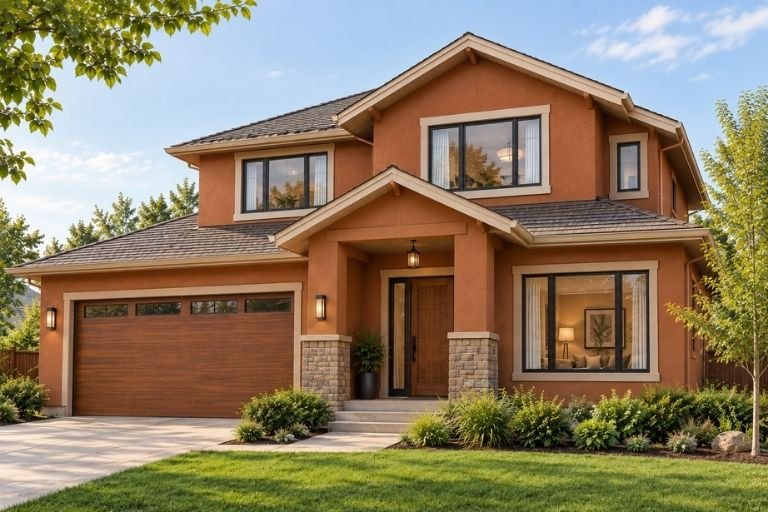
Terracotta adds warmth and personality to an exterior.
It works particularly well with Southwestern, Mediterranean, Spanish, ranch, stucco, and warm-climate architecture.
You don’t need a bright orange exterior. Muted clay, baked terracotta, and earthy red-brown shades can provide a more sophisticated appearance.
Pair terracotta with cream, warm beige, dark brown, sandstone, or muted green.
Best combinations: Terracotta + cream + dark brown
For a balanced exterior, consider Woodlawn Blue siding with warm white trim and a natural wood or dark-colored front door.
Best combinations: Woodlawn Blue + warm white + natural wood
19. Charcoal Gray for a Modern Look
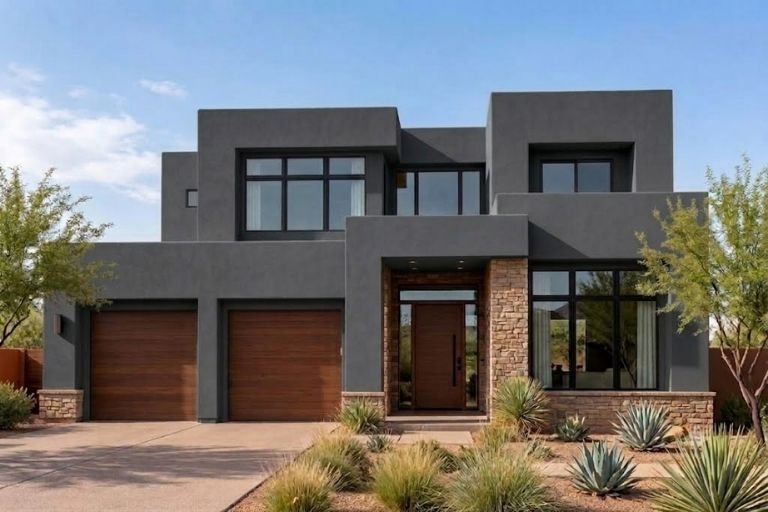
Charcoal gray provides the drama of a dark exterior without being as intense as pure black.
It works particularly well on modern and contemporary homes and can highlight clean architectural lines.
Charcoal also works well as an accent color for shutters, garage doors, front doors, or architectural sections.
Balance it with warm white, natural wood, stone, or bronze accents so the exterior doesn’t feel too cold.
Best combinations: Charcoal + warm white + natural wood
20. Soft Black
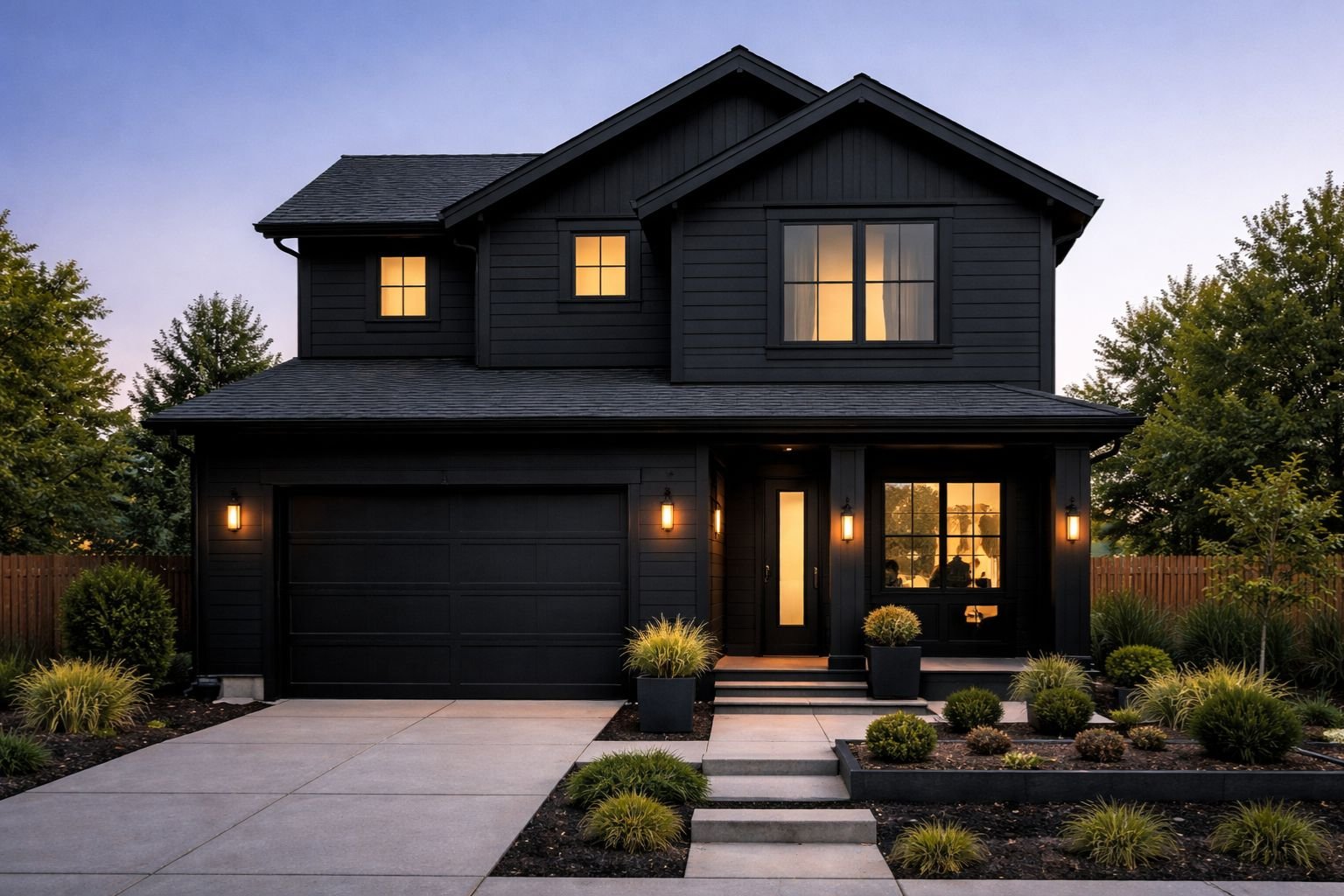
Black can create one of the most dramatic and architectural exterior appearances when used carefully.
Rather than covering every surface in pure black, consider using a softer black or near-black shade on siding, shutters, doors, garage doors, or architectural details.
Black looks especially sophisticated when balanced with warm wood, cream, stone, or natural landscaping.
Houzz’s 2026 outdoor trends research also identified black as a particularly popular exterior trim color.
Best combinations: Soft black + warm beige + natural wood
Best Exterior Color Combinations for a High-End Look
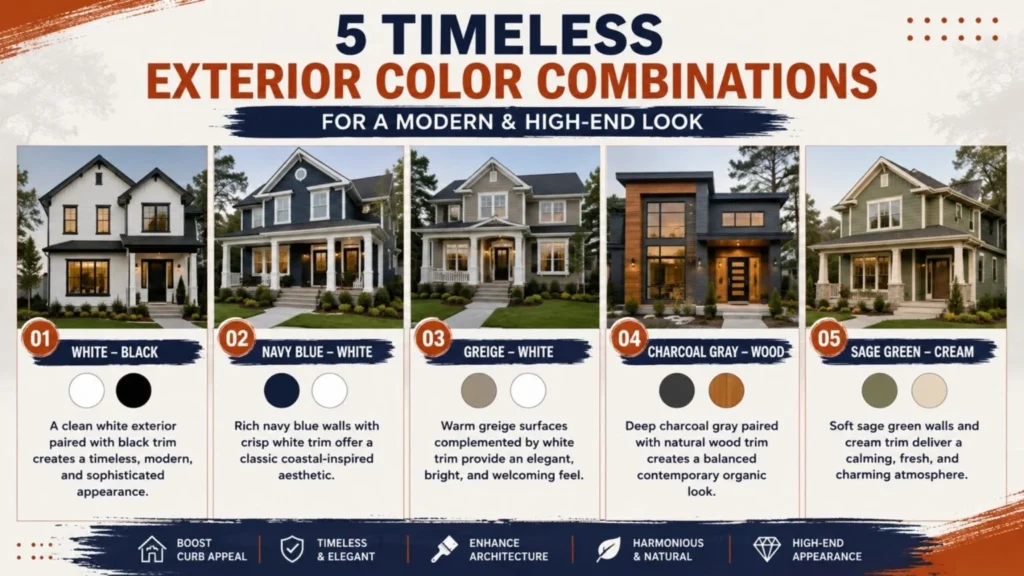
Choosing the right combination of colors is just as important as selecting the main shade. The best exterior color combinations create contrast, highlight architectural details, and give your home a more polished and expensive appearance.
Some of the most popular exterior color combinations for 2026 include:
- White siding with black trim for a clean, modern contrast
- Charcoal gray paired with natural wood accents for a sleek look
- Greige with white trim for a balanced and timeless design
- Navy blue with crisp white accents for a bold yet classic style
These combinations work well across different home styles and are often used to enhance curb appeal while maintaining a cohesive exterior design.
Best Exterior Color Combinations by Home Style
The best exterior palette depends partly on your home’s architectural style.
Modern Homes
Modern architecture generally works well with strong contrast and clean color combinations.
Consider:
- Warm greige + black + natural wood
- Charcoal + warm white + wood
- Soft black + warm wood
- Rich brown + cream
- Smoky jade + warm white
Modern Farmhouse Homes
Modern farmhouse exteriors can combine traditional light colors with darker accents.
Consider:
- Creamy white + black
- Warm beige + black
- Warm greige + dark bronze
- Sage green + cream
- Soft ivory + natural wood
Traditional Homes
Traditional homes often look best with refined, balanced combinations.
Consider:
- Warm beige + cream
- Taupe + ivory
- Navy + warm white
- Forest green + cream
- Soft blue-gray + ivory
Craftsman Homes
Craftsman homes naturally complement earthy colors and wood.
Consider:
- Forest green + cream + cedar
- Olive + warm ivory
- Warm taupe + dark bronze
- Rich brown + cream
- Smoky jade + warm white
Ranch Homes
Ranch homes often benefit from colors that connect the architecture with the landscape.
Consider:
- Warm beige + dark brown
- Olive + warm ivory
- Warm greige + natural wood
- Taupe + cream
- Soft blue-green + warm white
Contemporary Homes
Contemporary architecture gives you more freedom to use deeper colors and material contrast.
Consider:
- Charcoal + stone
- Soft black + natural wood
- Rich brown + warm white
- Deep green + cream
- Warm greige + black
Simple Exterior Design Ideas to Enhance Your Paint Colors
Paint colors look even better when combined with thoughtful exterior design elements. For more inspiration, explore these modern house exterior design ideas that can instantly improve curb appeal and complement your chosen color palette.
Adding features like wood accents, stone finishes, or updated doors can enhance the overall appearance and complement your chosen color palette.
Best Exterior Color Tips for a High-End Look
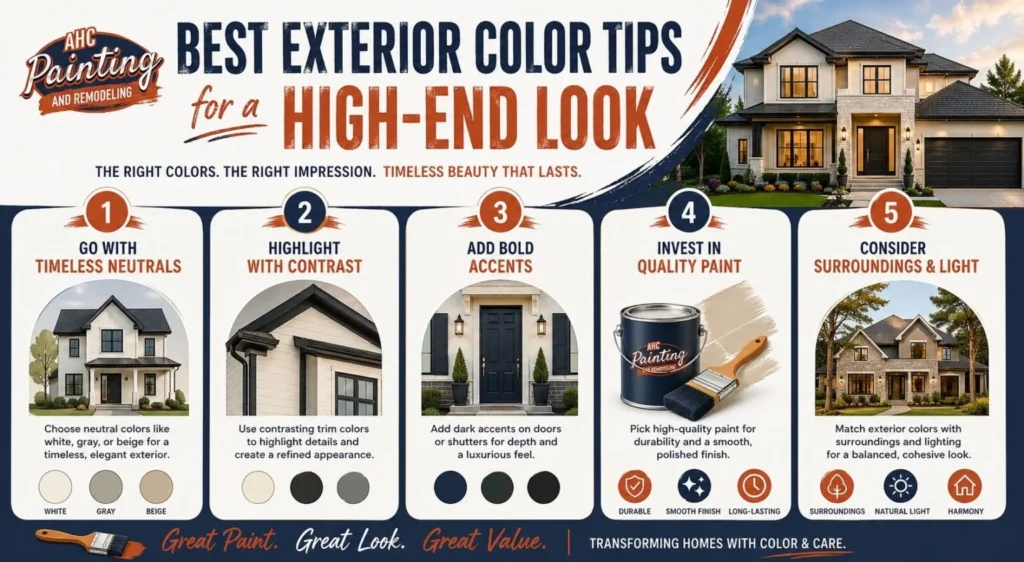
Choosing the right color is important, but how it’s applied also matters. Keep these tips in mind:
- Stick to a cohesive color palette
- Use contrast to highlight architectural details
- Consider lighting and surroundings
- Choose high-quality paint for durability
- Keep finishes clean and well-maintained
For interior inspiration, choosing the right shades inside your home is just as important. You can also explore our living room paint color ideas to create a cohesive look throughout your space.
What Trim Color Makes a House Look More Expensive?
Trim can dramatically change the appearance of an exterior.
In 2026, black trim is particularly popular, but the best trim color depends on the main exterior color and the home’s permanent materials.
Black Trim
Black provides strong contrast and works especially well with beige, white, greige, green, and modern exterior palettes.
Cream or Warm White Trim
Cream and warm white are excellent choices for beige, taupe, green, blue, and traditional exteriors.
Dark Bronze Trim
Dark bronze creates a subtle, sophisticated contrast and works beautifully with warm neutrals and earthy colors.
Natural Wood
Natural wood adds texture and warmth. It is especially effective on modern, Craftsman, farmhouse, and contemporary homes.
Body-Color Trim
Using a similar or matching trim color can create a quieter, more seamless appearance and works particularly well with contemporary architecture.
The best trim color should coordinate with your roof, windows, doors, brick, stone, and other permanent features.
Best Exterior Paint Colors for Different Home Materials
Vinyl Siding
Warm beige, greige, taupe, creamy white, muted green, navy, and charcoal can all work well with vinyl siding.
However, always check the siding manufacturer’s approved colors, specifications, and warranty requirements before painting.
Brick Homes
Warm white, creamy off-white, taupe, charcoal, muted sage, and deep green can complement painted brick.
The right color depends heavily on the existing brick undertones and whether you’re painting the entire brick exterior or using paint only on trim and architectural features.
Stucco Homes
Stucco works particularly well with warm neutrals such as beige, greige, ivory, taupe, and earthy tan.
Mediterranean and Southwestern homes can also work beautifully with terracotta, clay, sandstone, and warm brown accents.
Wood Siding
Wood siding already provides natural warmth.
Colors such as cream, sage, forest green, charcoal, navy, warm gray, and taupe can complement natural wood beautifully.
Best Vinyl Siding Colors for a High-End Look
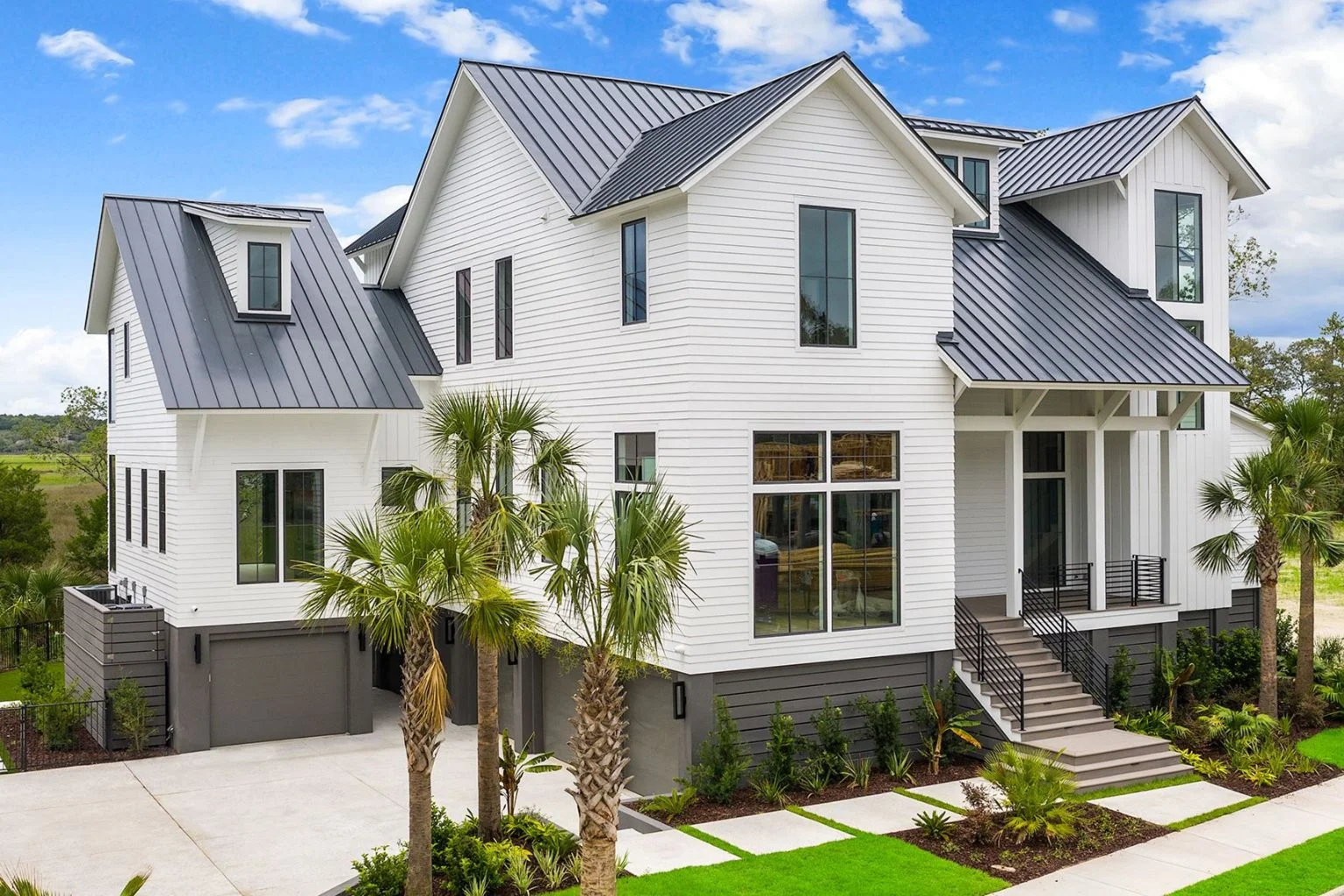
Vinyl siding offers many color options, but the best choice depends on the siding profile, roof, climate, sunlight exposure, and surrounding materials.
Some strong choices include:
- Warm beige
- Universal khaki
- Warm greige
- Creamy white
- Taupe
- Charcoal
- Sage green
- Olive green
- Deep forest green
- Navy blue
- Rich brown
Lighter and warmer colors can work especially well across large siding surfaces, while darker colors can create dramatic modern designs when the siding product is designed and warranted for that application.
For more ideas, explore our guide to best vinyl siding colors for modern homes.
Are Beige and Gray Exterior Paint Colors Still Popular in 2026?
Yes, but the direction has changed.
Beige has become especially prominent in current exterior color selections, while gray remains a viable choice but has become less dominant than it was during the peak of cool-neutral trends.
The important distinction is warm versus cool undertones.
If you’re choosing a new exterior color in 2026, consider:
- Warm beige
- Warm greige
- Taupe
- Warm khaki
- Mushroom-inspired neutrals
- Charcoal
You don’t need to repaint an existing gray home simply because trends have changed. A well-maintained gray exterior can still look excellent when the color works with the architecture and surrounding materials.
Final Thoughts
The best exterior paint colors for 2026 focus on clean contrasts, natural tones, and modern curb appeal. From timeless whites and warm neutrals to bold charcoal and deep greens, the right color can instantly elevate your home’s overall look.
Choosing the right shade is only part of the process. Proper surface preparation, high-quality materials, and expert application are essential for a finish that lasts and performs well over time.
If you’re planning to upgrade your home’s exterior, the team at AHC Painting and Remodeling is ready to help you choose the perfect color and deliver a clean, durable result. Contact us today to schedule your consultation and give your home a fresh, high-end look.
FAQs
What are the best exterior paint colors for 2026?
Some of the strongest exterior color choices for 2026 include warm beige, Universal Khaki, warm greige, taupe, creamy white, ivory, forest green, olive, sage, warm eucalyptus, smoky jade, navy, rich brown, terracotta, charcoal, and soft black.
What exterior paint color makes a house look more expensive?
Warm neutrals such as beige, taupe, khaki, and greige can create a sophisticated appearance. Deep green, rich brown, navy, charcoal, and soft black can add contrast and architectural depth. The trim, roof, natural materials, and overall color combination are just as important as the main exterior color.
What is the most popular exterior house color in 2026?
Beige has become a leading exterior wall color in Houzz’s 2026 U.S. Outdoor Trends research. Warm beige and related neutral shades are particularly relevant as homeowners move toward warmer exterior palettes.
What are the best exterior house color combinations?
Popular combinations include warm beige with cream and dark brown, Universal Khaki with creamy white and natural wood, warm greige with black and wood, forest green with ivory and cedar, navy with warm white and wood, and rich brown with cream and stone.
Are gray house colors out of style in 2026?
No. Gray is still a useful exterior color, especially charcoal and warmer gray-based shades. However, warmer neutrals such as beige, greige, taupe, and khaki have become more prominent. If you like gray, choosing a warmer or more sophisticated shade can give the exterior a more current appearance.
Are white exterior houses still popular?
Yes. White remains a timeless exterior choice. In 2026, warmer whites and creamy off-whites are particularly useful for homeowners who want a softer alternative to extremely stark white.
What trim color makes a house look expensive?
Black is a popular choice for creating strong contrast, while cream, warm white, dark bronze, and natural wood can create a softer and more sophisticated appearance. The best trim color depends on the main exterior color, roof, windows, and permanent materials.
Is black a good exterior house color in 2026?
Yes. Black remains a strong exterior accent and can also work as a primary color on suitable homes. If a full black exterior feels too intense, consider charcoal, soft black, deep brown, or deep forest green.
What are good Feng Shui colors for a house exterior?
For homeowners who follow Feng Shui principles, earthy colors such as beige, taupe, green, and warm brown can create a grounded appearance. The best choice also depends on the home’s surroundings, orientation, and overall color balance.