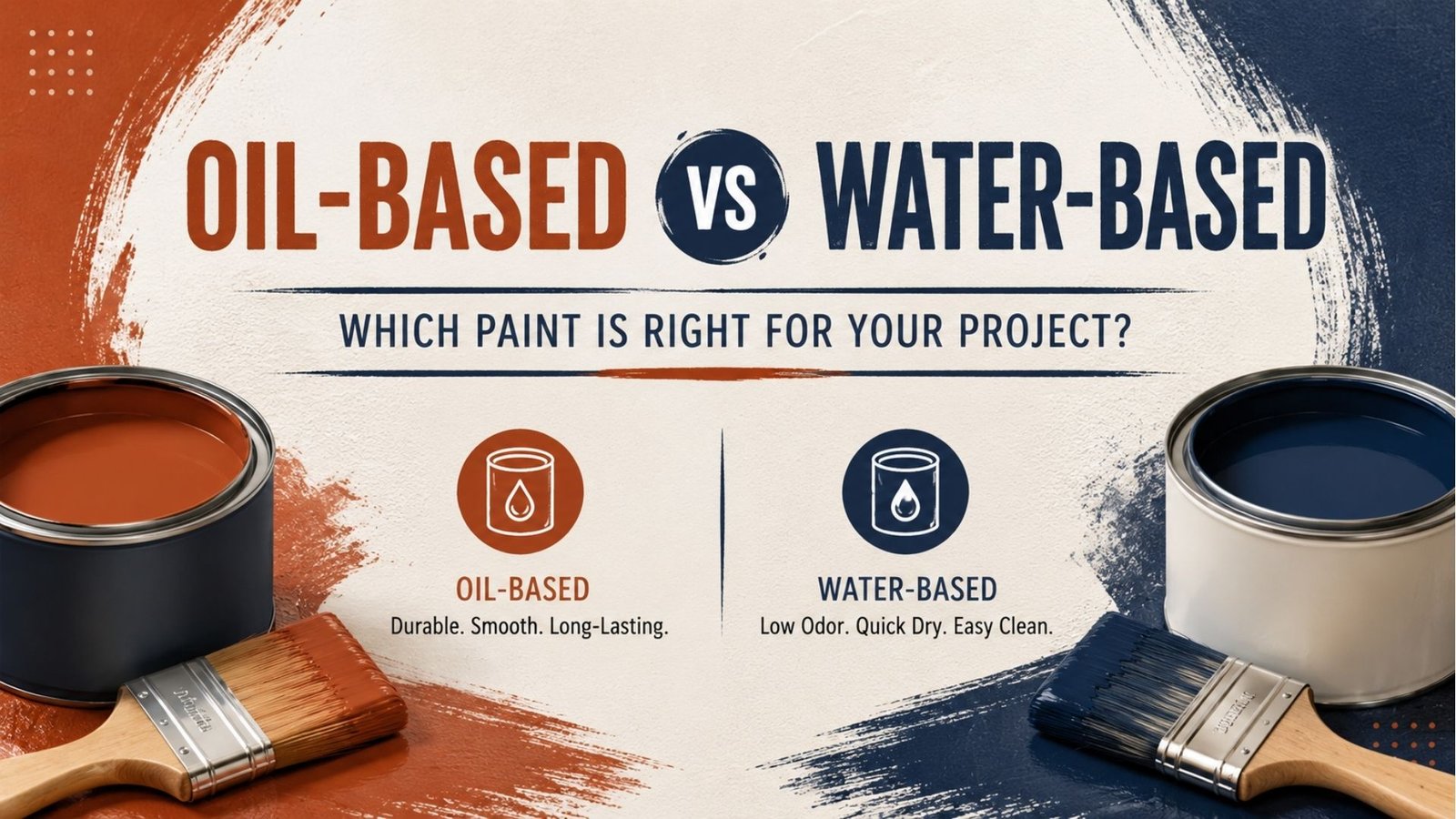
Choosing the right paint involves more than finding a color you love. The type of paint you choose can affect durability, drying time, finish, cleanup, odor, and how well the coating performs on a particular surface.
Oil-based and water-based paints are two common options for residential projects. Both can provide attractive, durable results, but each has characteristics that make it better suited to certain surfaces and applications.
Quick Answer: Oil-Based vs Water-Based Paint
Water-based paint is generally a practical choice for walls and ceilings because it dries faster, has less odor, and is easier to clean up. Oil-based paint can be useful for certain trim, doors, cabinets, and other high-wear surfaces where a hard, smooth finish is desired.
Neither type is always better. The right choice depends on the surface, existing coating, desired finish, and specific product formulation.
What Is Oil-Based Paint?
Oil-based paint, including traditional alkyd coatings, uses an oil- or solvent-based binder. It is known for creating a hard, durable finish and providing good leveling, which can help create a smooth appearance on certain surfaces.
Because it generally takes longer to dry, oil-based paint gives the coating more time to level during application. However, the slower drying time can also make projects take longer.
Oil-based paint is often considered for surfaces that receive frequent handling or wear, such as certain doors, trim, cabinets, and furniture.
Pros of Oil-Based Paint
- Hard and durable finish
- Smooth application and good leveling
- Suitable for certain high-wear surfaces
- Can provide a traditional, rich finish
- Often performs well on properly prepared wood surfaces
Cons of Oil-Based Paint
- Longer drying time
- Stronger odor during application
- More involved cleanup
- Often has higher VOC levels than water-based alternatives
- Requires proper ventilation when used indoors
What Is Water-Based Paint?
Water-based paint uses water as its primary carrier and includes many modern acrylic and latex formulations. It has become a popular choice for residential painting because it generally dries faster, is easy to apply, and offers convenient cleanup.
Modern water-based coatings have also improved significantly in durability. Many are specifically formulated for trim, doors, cabinets, and other surfaces that need more performance than standard wall paint.
Pros of Water-Based Paint
- Generally dries faster
- Easy cleanup with soap and water when specified
- Typically has less odor than conventional oil-based paint
- Many low-VOC options are available
- Works well for many interior walls and ceilings
- Available in a wide range of colors and finishes
Cons of Water-Based Paint
- Not every formulation is suitable for high-wear surfaces
- Proper surface preparation is still essential
- Some specialty applications require specific coatings
- Performance can vary between products
Oil-Based vs Water-Based Paint: Key Differences
| Feature | Oil-Based Paint | Water-Based Paint |
| Drying Time | Generally slower | Generally faster |
| Cleanup | Usually requires specified solvent | Often soap and water |
| Odor | Generally stronger | Generally lower |
| Finish | Hard and smooth | Smooth with modern formulations |
| Durability | Excellent for certain applications | Very good with the right product |
| VOCs | Generally higher | Generally lower |
| Best For | Certain trim, doors, cabinets and high-wear surfaces | Walls, ceilings and many interior applications |
These are general characteristics. Paint technology continues to evolve, so always check the manufacturer’s instructions for the specific product you plan to use.
Which Paint Dries Faster?
Water-based paint generally dries faster than oil-based paint, which can be helpful when completing a project quickly or applying multiple coats.
Oil-based paint takes longer to dry, but that slower drying time can help the coating level smoothly on certain surfaces.
Temperature, humidity, ventilation, surface condition, and paint thickness can all affect drying time. Always follow the product’s recommended drying and recoat times.
Which Paint Is Best for Walls, Trim, Doors, and Cabinets?
The best paint depends on the surface and how much wear it receives.
Interior Walls and Ceilings: Water-based paint is generally a practical choice because of its faster drying time, lower odor, and easy cleanup.
Trim and Baseboards: Both quality water-based trim coatings and oil-based paint can work well. The choice depends on the desired finish, durability requirements, and existing coating.
Doors and Cabinets: These surfaces experience regular handling, so durability matters. Oil-based paint can provide a hard finish, while modern water-based products specifically designed for cabinets and trim can also provide excellent performance.
For wood surfaces, the finish and preparation are just as important as the paint type. See our guide to Best Interior Wood Finishes for Modern Homes for additional considerations when choosing a finish for interior wood.
Is Oil-Based or Water-Based Paint Better for Exterior Surfaces?
Exterior paint selection depends on the surface, weather exposure, existing coating, and product formulation.
Modern water-based exterior coatings are widely used because they can provide good durability, faster drying, and easier cleanup. Certain oil-based products may still be appropriate for specific exterior applications.
Always choose a coating specifically formulated for exterior use and follow the manufacturer’s preparation and application instructions.
Which Paint Is Easier to Clean Up?
Water-based paint generally wins when it comes to cleanup. Many water-based products can be cleaned from brushes and tools with soap and water when specified by the manufacturer.
Oil-based paint usually requires the cleaning method recommended for that product, which may involve a solvent.
For homeowners handling a DIY interior project, easier cleanup can make water-based paint a more convenient option. Choosing the right house painting tools and equipment can also make preparation and application easier.
Which Paint Has Less Odor?
Water-based paint generally produces less odor than conventional oil-based paint. This can be an important consideration when painting bedrooms, living spaces, or other occupied areas.
However, low odor does not mean zero emissions. Products vary, so follow the label instructions and provide adequate ventilation during and after painting.
Can You Paint Water-Based Paint Over Oil-Based Paint?
Yes, but proper preparation is essential.
Oil-based coatings can leave a hard or glossy surface that may prevent a new water-based coating from bonding properly. Depending on the existing finish, preparation may include cleaning, sanding or deglossing, and applying a compatible bonding primer.
Before repainting, inspect the existing coating for peeling, cracking, or other damage. Proper preparation is one of the most important parts of a successful painting project. For more preparation tips, see Top Painting Mistakes Homeowners Make.
How to Choose Between Oil-Based and Water-Based Paint
Instead of looking for one universal winner, consider these questions:
- What are you painting? Walls, trim, cabinets, doors, and exterior surfaces have different requirements.
- How much wear will the surface receive? High-touch surfaces may require a harder, more durable coating.
- How quickly do you need the project completed? Water-based paint generally offers faster drying.
- How important is easy cleanup? Water-based products are usually easier to clean from tools.
- What coating is already on the surface? Existing paint can affect preparation, primer selection, and compatibility.
- Is the surface indoors or outdoors? Exterior projects require products designed for outdoor conditions.
- What finish do you want? Consider the sheen, smoothness, and appearance you want before selecting the product.
When Should You Hire a Professional Painter?
Professional help can be especially useful when the existing coating is unknown, the surface needs extensive preparation, or you are painting over an older oil-based coating.
A professional can help identify surface issues, recommend appropriate preparation, and select a coating system suited to the material and conditions of the project.
Final Thoughts
Choosing between oil-based and water-based paint comes down to more than simply picking one over the other. Each type offers different benefits, and the right choice depends on the surface, desired finish, durability needs, and conditions of your project.
Water-based paint is often a practical option for walls and ceilings because it dries faster, has less odor, and offers easy cleanup. Oil-based paint, on the other hand, can be a good choice for certain trim, doors, cabinets, and other surfaces where a hard, smooth finish is important.
If you’re planning a painting project and aren’t sure which paint is right for your home, the team at AHC Painting and Remodeling can help you choose the right products and approach for your surfaces. Contact us today to discuss your project.
Frequently Asked Questions
Is water-based paint better than oil-based paint?
Not in every situation. Water-based paint is often more convenient for interior projects, while oil-based paint can be useful where a hard, durable finish is needed.
Which lasts longer, oil-based or water-based paint?
Longevity depends on the product, surface preparation, application, and environmental conditions. Both can provide long-lasting results when used correctly.
Can you paint water-based paint over oil-based paint?
Yes. The surface typically needs proper cleaning and preparation, and a compatible bonding primer may be required for good adhesion.
Is oil-based paint better for trim?
It can be, particularly when a hard, smooth finish is desired. However, modern water-based trim coatings can also provide excellent durability, so the specific product and surface should be considered.